
Review · CAPPADOCIA POTTERY WORKSHOPS
Visit to Cappadocia ceramic workshop and carpet store
Cappadocia’s traditional crafts come alive in two very different workshops: women weaving carpets by hand, and pottery makers shaping clay from the region’s Red River and rocky hills. You can watch the process, ask questions, and try making pottery yourself.
I like the private car and driver, which keeps this short outing easy to fit around sightseeing. I also like the chance to see work made in local family businesses rather than only browsing finished souvenirs. The main caution is simple: hands-on pottery may not always happen, so confirm this before booking if making a pot is your main reason for going.
In This Review
- Key points to know before you book
- A craft tour with a shopping angle
- First stop: the women’s carpet cooperative
- Second stop: Cappadocia’s pottery tradition
- Why the private format matters
- Languages and communication
- Is $30 a fair price?
- What to buy, and what to skip
- Who will enjoy this experience most?
- Practical advice for a better visit
- Should you book it?
- FAQ
- Where does this tour take place?
- How long does the experience last?
- How much does the tour cost?
- Is transportation included?
- Is this a private tour?
- Can I try making pottery?
- What happens at the carpet workshop?
- Which languages are available?
- Can I cancel or pay later?
Key points to know before you book
- Two craft stops in 2.5 hours: Visit a women’s carpet cooperative and a traditional pottery workshop.
- Pottery is included at no extra charge: You can try shaping clay after the demonstration, though the hands-on portion should be confirmed.
- Private transport makes the timing flexible: A car and driver collect and return you in Cappadocia.
- The carpet stop has a social purpose: Purchases support a women’s cooperative and its training tradition.
- Mehmet is one named driver: He received especially warm praise for his kind, gentle manner and easy conversation.
- The shopping element is real: This is part cultural visit, part opportunity to buy carpets, ceramics, textiles, food, and clothing.
A craft tour with a shopping angle
This is not a museum visit or a long guided walk through Cappadocia. It is a private craft outing built around two working businesses, with time to watch demonstrations and consider buying local products.
The setting matters. Cappadocia sat along the Silk Road, and the region has served as a trading center for centuries. Hittites, Assyrians, Greeks, Arabs, Jews, and Turks all took part in commercial life here. That long exchange helps explain why pottery, carpets, leather, textiles, and other handmade goods remain closely tied to local identity.
I like this approach because it gives you a practical look at how traditional goods are made. You are not simply shown a finished carpet or bowl behind glass. You can see the hands, tools, clay, thread, and patient work involved.
Still, you should book with the right expectation. The experience includes stops where products are displayed for sale. If you dislike shopping presentations, the sales element may feel too strong. If you want to understand local crafts and perhaps take home something useful, the format can work well.
The tour costs $30 per person and lasts about 2.5 hours. Since a car, driver, pickup, drop-off, demonstrations, and pottery making are included, the price is reasonable for a private half-day-style outing. Its value depends on how much you want to shop. You are paying for access and transport as well as the cultural explanation, not only for a craft class.
More Cappadocia pottery workshops:
- Historical Pottery Making in Cappadocia
★︎ 5.0 · 261 reviews - Avanos: Pottery Workshop with Clay Making Experience
★︎ 4.8 · 233 reviews - Cappadocia Pottery Workshop Class
★︎ 5.0 · 191 reviews
First stop: the women’s carpet cooperative
The carpet visit takes place at a women’s cooperative. You watch women weave carpets by hand and learn how skills are passed between generations. The cooperative model also gives the work an economic purpose. It helps women earn money, develop confidence, and build skills in a setting where women contribute less to the wider economy than men.
That social side gives the stop more weight than a standard carpet showroom. You can see the craft as both an art form and a source of independence. The work requires patience, close attention, and a great deal of time, so the price of a handmade carpet should not be compared casually with the cost of a factory-made floor covering.
You may also hear an explanation of how the shop prices its carpets. This is useful if you are nervous about buying. A reputable seller can explain the materials, knotting, design, age, and amount of labor behind a carpet. The tour is presented as a way to reduce the risk of buying a fake item or paying far too much.
That does not mean you should feel obliged to buy. I would treat the carpet stop as an education first. Look closely, ask what the carpet is made from, ask how long it took to weave, and compare the explanation with the price. If you do not want a carpet, say so politely and enjoy the demonstration.
The cooperative is a particularly good fit if you are interested in ethical purchasing. A purchase supports the local economy and contributes directly to the women working there. That is a more meaningful souvenir story than simply buying a mass-produced item with a Cappadocia label.
The trade-off is time. In a 2.5-hour tour, a long carpet presentation could reduce the time available for pottery. If carpets do not interest you, tell the driver or host at the start so your expectations are clear.
Second stop: Cappadocia’s pottery tradition
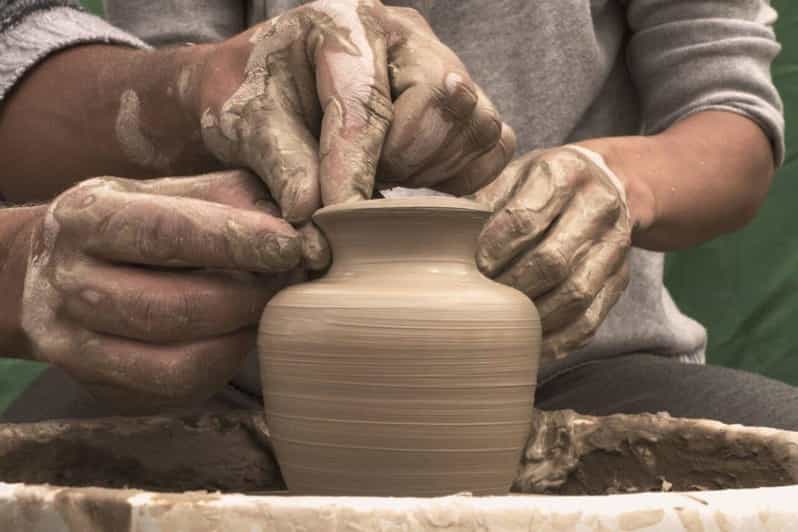
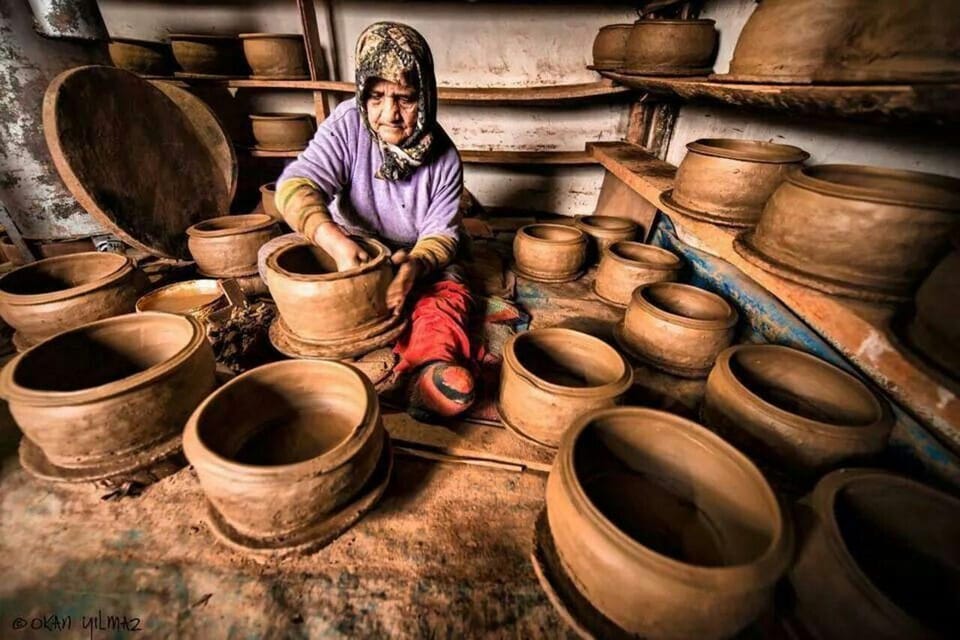
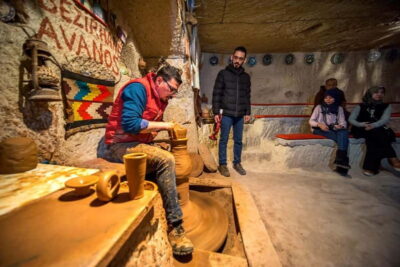
The pottery workshop provides the more active part of the outing. Many workshops in Cappadocia are family-run businesses, and some families have continued the craft for generations.
The tradition reaches back to the Hittites, with pottery in Anatolia dating to about 1750 B.C. The materials are local too. Red clay comes from the Red River, while white clay is collected from the rocky parts of Cappadocia. Those two colors help give regional ceramics their familiar look.
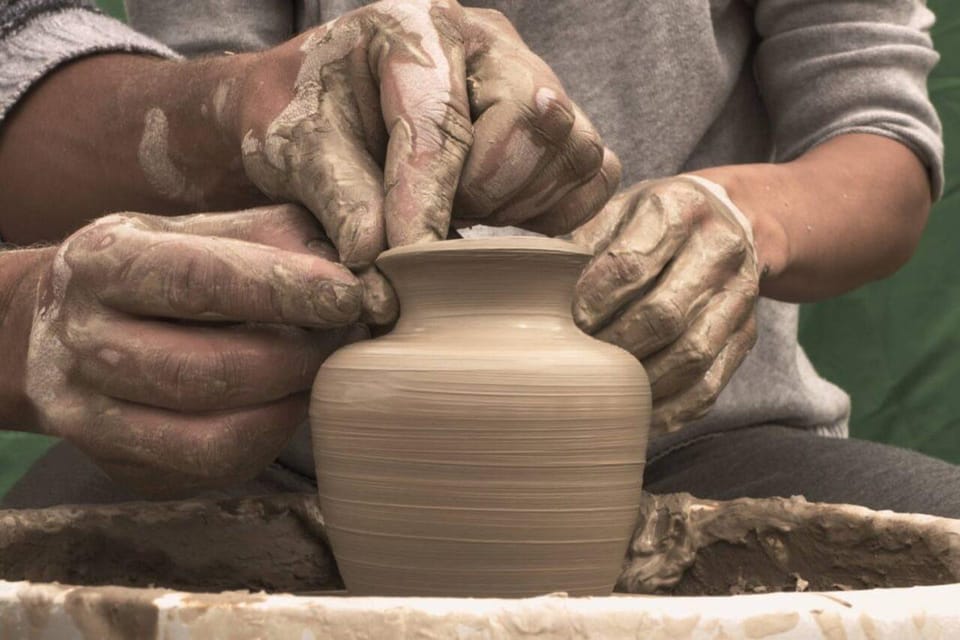
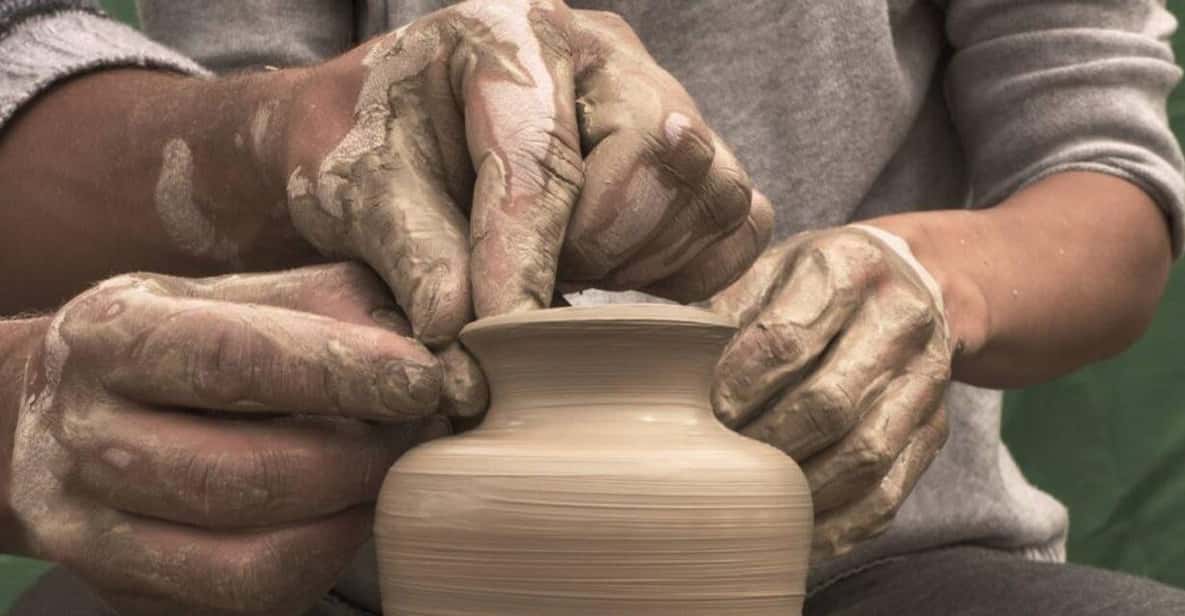
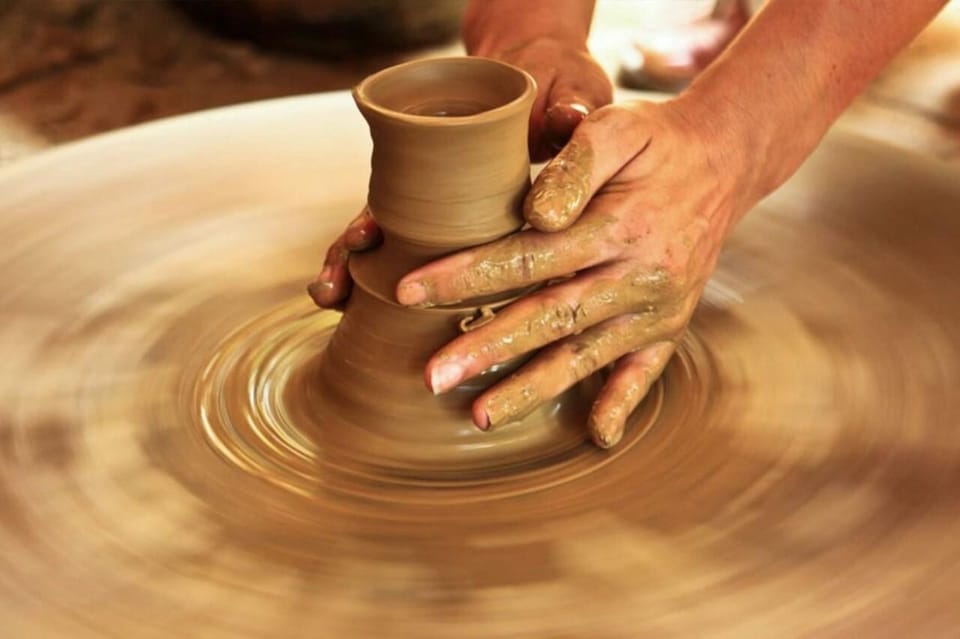
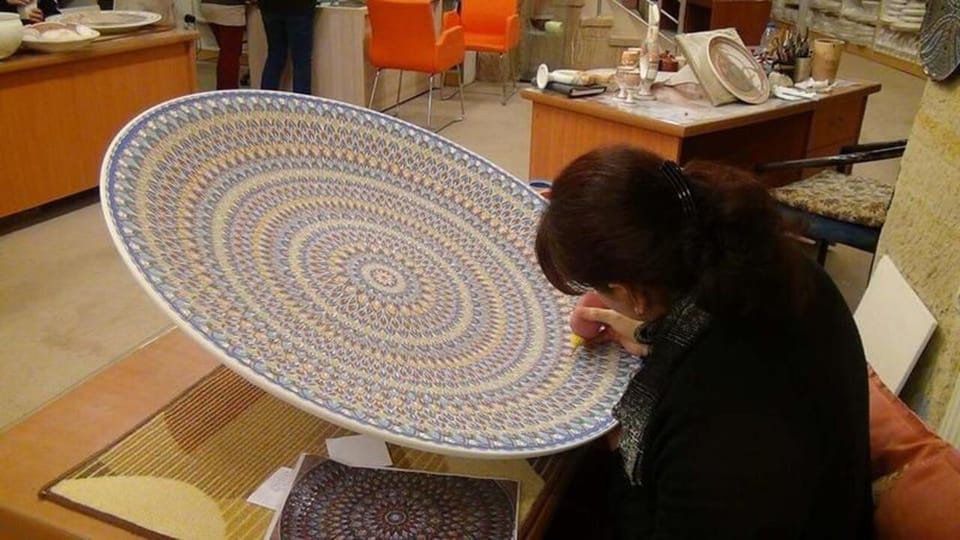
During the demonstration, a potter shows how a piece is shaped. You see the clay worked by hand and formed into a vessel before the final decorative and firing stages. The information provided does not specify the exact equipment or firing method, so you should think of this as a demonstration of the craft rather than a full technical class.
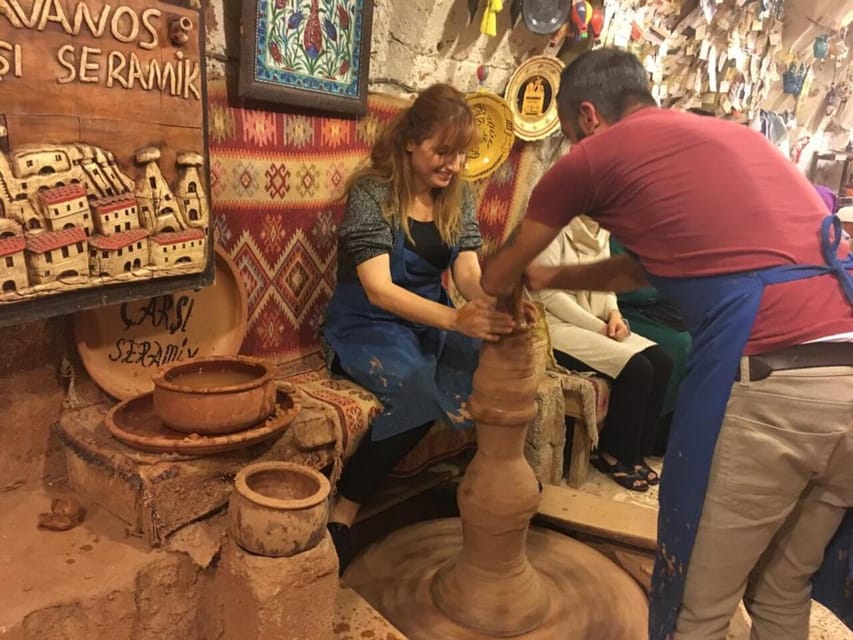
You can also try making a piece yourself. This is included in the price and costs nothing extra. For children, couples, and anyone who likes practical activities, this may be the most memorable part of the visit.
There is one important warning. A confirmed booking included a pottery activity, but the participant found that the visit was mainly a demonstration and explanation of the shop’s prices, with no chance to make pottery. The driver was described as pleasant, but the hands-on part did not take place. Because of this, ask at pickup whether you will actually use the wheel or clay. If the answer is unclear, contact the provider before the day of the tour.
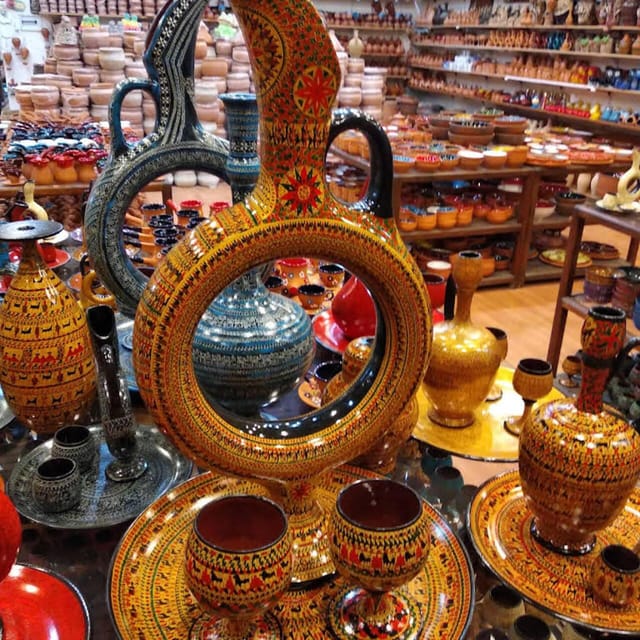
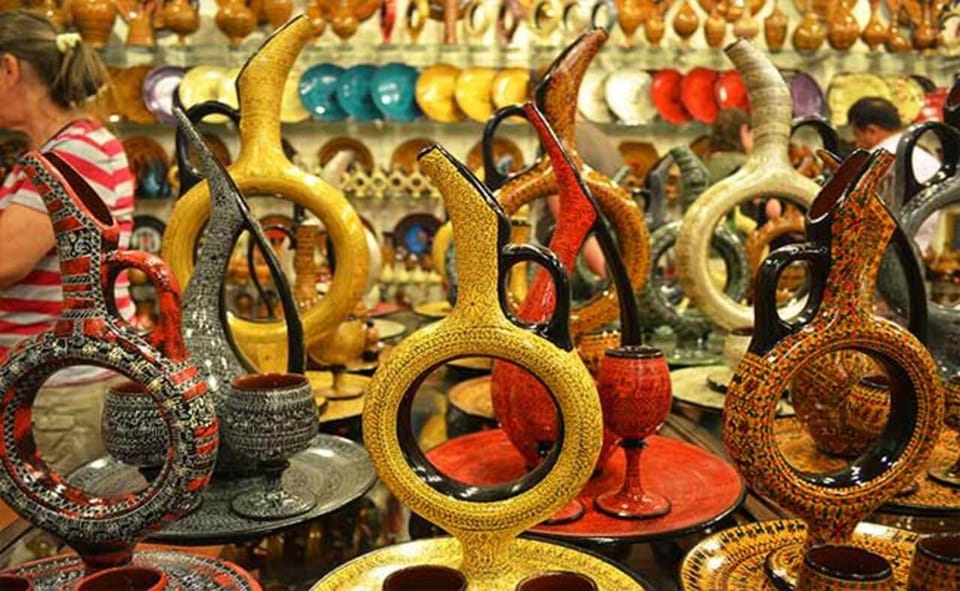
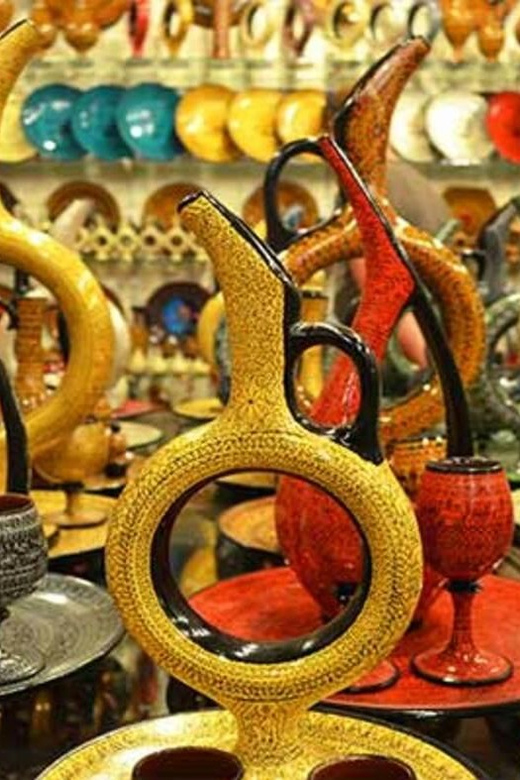
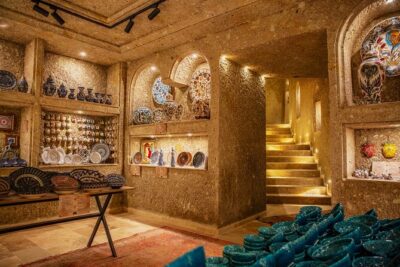
After the demonstration, you are shown handmade pottery and ceramic pieces specific to the region in style and color. This is your chance to compare simple working vessels with more decorative pieces. Some may suit daily use, while others are intended mainly for display.
As with the carpet visit, shopping is part of the experience. I recommend deciding your budget before you enter the showroom. Cappadocia’s ceramics can be attractive, but you do not need to buy the first piece placed in front of you.
Why the private format matters
The private group format is one of the strongest practical features. You are not placed with a large mixed group, so pickup and drop-off are handled by a car and driver for your party. That matters in Cappadocia, where sightseeing days often include early starts, cave sites, viewpoints, and long drives between towns.
A private booking can also feel less rushed. You may be able to spend more time at the craft that interests you and less time at the one that does not. The supplied schedule does not promise a custom itinerary, so do not assume every request can be added. Still, a private setting is more personal than a standard coach stop.
One participant booked a 5 PM departure and found the timing worked well. An afternoon or early evening slot can suit you if you have spent the morning visiting valleys, underground sites, or viewpoints. Check the available starting times when you choose your date, since the exact schedule is not fixed in the activity details.
Mehmet is one driver specifically praised for his friendly manner. He was described as easy to talk to, kind, and gentle. Another couple was pleased with his approach as well. The available information does not identify every driver or promise that Mehmet will handle your booking, so request him only if the provider confirms availability.
More Cappadocia workshops:
- Cappadocia: Sand-Brewed Turkish Coffee Workshop
★︎ 4.9 · 745 reviews - Cappadocia: Turkish Mosaic Lamp Workshop in Göreme – All Included
★︎ 5.0 · 139 reviews - Cappadocia: Authentic Pottery Workshop Experience
★︎ 4.6 · 75 reviews - Sand-Brewed Turkish Coffee Workshop in Cappadocia
★︎ 5.0 · 64 reviews
Languages and communication
The host or greeter service is available in Chinese, English, French, Italian, Japanese, Portuguese, Spanish, Turkish, and Russian. That wide language range makes the tour accessible to many international visitors.
You should still make sure your preferred language is selected when booking. The information lists available languages but does not explain whether every stop has a separate interpreter or whether one multilingual host leads the entire visit.
Clear communication matters here because the tour combines cultural explanation with shopping. You want to understand what is being offered, how a carpet is made, what materials are used, and whether pottery making is available on your date.
Is $30 a fair price?
At $30 per person, this is good value if you want a private introduction to two traditional crafts and need transport. A 2.5-hour private outing would otherwise require arranging a driver and finding the workshops yourself.
The price also includes pottery making, at least as advertised, so there is no separate class fee. Pickup and drop-off remove another practical cost. For a couple or small private party, the value is stronger than it would be for someone who only wants to spend ten minutes looking at ceramics.
The value drops if you are not interested in shopping. Both stops include displays of handmade goods, and the carpet workshop in particular may involve detailed explanations of prices and products. This is not a no-shopping cultural lecture.
You also need to consider the uncertainty around the pottery activity. If you book mainly to make a pot, the $30 price is less appealing unless the provider confirms that you will get hands-on time. If your main goal is to see local craft production, the demonstration alone may still justify the cost.
The overall score is 4.6 out of 5 from 19 ratings, with praise focused on pleasant drivers, private arrangements, and an interesting outing. One low rating centered on the missing pottery activity, which is the main issue I would address before paying.
What to buy, and what to skip
A carpet is the largest possible purchase here, both financially and physically. If you are considering one, ask about fiber, knot count, origin, age, cleaning, shipping, and return terms. You should also ask for the final price in writing. A trusted seller should not object to careful questions.
Ceramics are easier to carry and usually easier to fit into a travel budget, though the exact prices and shipping options are not provided. Look for regional colors and styles, but remember that a handmade object does not need to be expensive to be meaningful.
The broader shopping tour may also include local textiles, food, clothing, and leather products. The description does not promise a stop for every category, so treat these as possible products rather than guaranteed visits.
My best advice is to shop slowly. Watch the demonstrations before you decide. If you see something you like, ask who made it and how it was produced. A good souvenir should fit your home, budget, and luggage, not just your mood in the showroom.
Who will enjoy this experience most?
I would recommend this outing to anyone who wants a short introduction to Cappadocia’s handmade traditions without committing to a full-day craft course. It suits couples, families, private groups, and shoppers who want help finding established sellers.
It is also a good choice if you have limited time. Two and a half hours is long enough to see both crafts but short enough to fit beside other Cappadocia plans.
Families may especially enjoy the pottery attempt, provided it is confirmed. Children can watch the clay take shape and try a simple piece themselves. The private car also avoids the complications of bringing a child into a large group.
You may want to skip it if your priority is hiking, archaeological sites, or scenery. This tour does not focus on Cappadocia’s valleys, rock formations, or underground cities. It is about workshops and shopping.
You should also think twice if you dislike sales conversations. The carpet and pottery stops are working businesses, and finished products are shown after the demonstrations. That is not a flaw, but it is central to the experience.
Practical advice for a better visit
Contact the provider before the outing and confirm four points: your pickup location, the starting time, the language, and the hands-on pottery session. The first three are basic details. The fourth is especially important because the activity has not always matched the expectation of making pottery.
Wear clothing you can move comfortably in if you plan to work with clay. The information does not specify whether aprons or protective clothing are supplied, so avoid wearing something you would hate to stain.
Bring room in your luggage if you may buy ceramics or textiles. The tour does not state how purchases are packed or shipped. Ask about protection and delivery before paying for anything fragile or large.
Keep your receipt for any purchase. For expensive carpets, ask for documentation and clear details about materials and origin. You are not being difficult by checking. You are being sensible.
The activity allows free cancellation up to 24 hours before the scheduled start for a full refund. You can also reserve and pay later, which is useful while you are still arranging your Cappadocia schedule.
Should you book it?
Book this tour if you want a private, easy way to see carpet weaving and pottery production, and you are comfortable with a shopping-based format. The women’s cooperative adds a useful social angle, while the local clay and family workshops connect the ceramics to Cappadocia itself.
I would book it with one condition: confirm that pottery making will actually be available. If the provider gives a clear answer, the tour offers good value at $30, especially with transport and a private car included.
Skip it if you want a pure craft lesson, a no-sales visit, or a nature-focused Cappadocia excursion. For everyone else, this is a compact and practical look at two crafts that have helped define the region for centuries.
FAQ
Where does this tour take place?
The experience takes place in Cappadocia, Turkey, visiting a ceramic or pottery workshop and a carpet workshop.
How long does the experience last?
The tour lasts 2.5 hours.
How much does the tour cost?
The listed price is $30 per person.
Is transportation included?
Yes. A car and driver, along with pickup and drop-off, are included.
Is this a private tour?
Yes. The activity is offered for a private group.
Can I try making pottery?
Pottery making is included and is described as costing nothing extra. However, confirm the hands-on session before booking because it has not taken place on every reported visit.
What happens at the carpet workshop?
You visit a women’s cooperative where you can watch carpets being woven and learn about the work. Handmade carpets and other products may be offered for purchase.
Which languages are available?
The host or greeter service is listed as available in Chinese, English, French, Italian, Japanese, Portuguese, Spanish, Turkish, and Russian.
Can I cancel or pay later?
You can cancel up to 24 hours in advance for a full refund. The reserve-now, pay-later option lets you book without paying immediately.
More Shopping Tours in Cappadocia
- Cappadocia Small Group Original Green Tour (Non-Shopping)
★︎ 5.0 · 31 reviews - Cappadocia Private Shopping Tour with Driver
★︎ 5.0 · 3 reviews
Just added around Cappadocia
- Sunrise Hot Air Balloon Ride in Cappadocia★︎ 4.3 · 3 reviews
- 2 Days Cappadocia Tour★︎ 5.0 · 3 reviews
- Cappadocia: Full Day Tour to see Best Highlights in 1 Day★︎ 4.1 · 3 reviews
- Private Cappadocia Tour (Only Van and Driver)★︎ 4.0 · 3 reviews
- Private Cappadocia Tour w/Chimneys and Goreme Open Air Museum★︎ 5.0 · 3 reviews
- Cappadocia Dreamscapes: Tailored Shoots by Zerders Photography★︎ 5.0 · 3 reviews
- Best Cappadocia Private Tour★︎ 4.5 · 3 reviews
- Southeast Anatolia Tour (Nemrut, Gobeklitepe, Zeugma)★︎ 5.0 · 3 reviews
Cappadocia Pottery Workshops, compared.
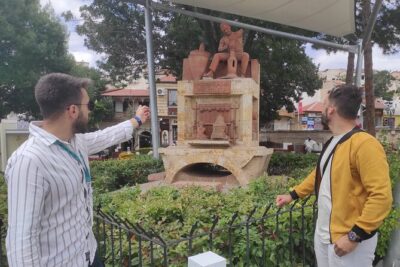
Historical Pottery Making in Cappadocia
Read our review →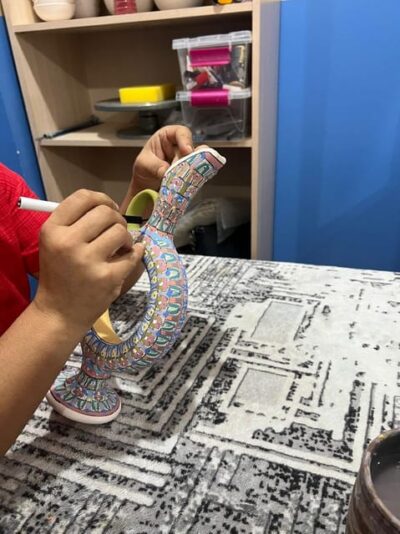
Avanos: Pottery Workshop with Clay Making Experience
Read our review →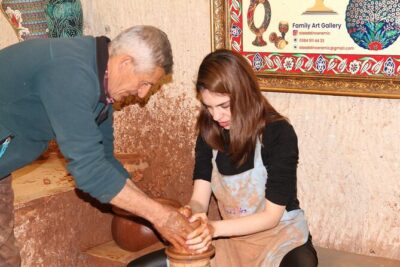
Cappadocia: Authentic Pottery Workshop Experience
Read our review →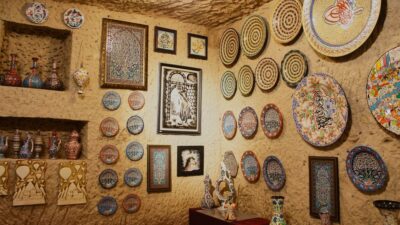
Avanos: Turkish Music and Dance Show with Dinner & Drinks
Read our review →
Private Red Tour with Pottery Workshop in Cappadocia
Read our review →Browse the lists this tour appears in