
Review · CAPPADOCIA COOKING CLASSES
Cappadocia Cooking Class
The best part of this Cappadocia cooking class is that it begins with shopping in Urgup, then moves into a local kitchen for a shared meal. You are not simply watching a chef work. Depending on the host, you may chop vegetables, stir pots, shape Turkish ravioli, stuff grape leaves, or help place bread in a tandoor oven.
I like the small maximum of six people and the chance to talk about daily Turkish life with a local interpreter such as Kadir. I also like the range of hosts and dishes, from yogurt soup and eggplant-wrapped meatballs to Cappadocian dessert made with flour, grape molasses, and butter or sunflower oil. The main consideration is that the hands-on cooking can vary. One host may teach each step closely, while another may prepare large pots and ask you to help only now and then.
In This Review
- Key points at a glance
- From Urgup shopping to a Cappadocian kitchen
- What you may cook during the four-hour visit
- A real home kitchen, not a polished cooking studio
- Meeting the hosts and local interpreters
- Why the small group size matters
- Timing, transport, and the pace of the afternoon
- How much value do you get for $176.61?
- Dietary needs and special requests
- The most authentic part is often after the cooking
- Who should book this Cappadocia cooking class?
- Should you book it?
- FAQ
- Where does the Cappadocia cooking class take place?
- What time does the class start?
- How long does the experience last?
- Is hotel pickup included?
- How many people can join?
- What food is included?
- Are drinks included?
- Is the class taught in English?
- Can children join?
- What is the cancellation policy?
Key points at a glance
- Start with a local food shop: Visit small stores and markets in Urgup before cooking.
- Cook in a real setting: The class may take place in a local home, apartment, or restaurant.
- Keep the group small: The maximum is six people, which leaves room for conversation and questions.
- Meet local hosts: Kadir may interpret, while hosts such as Basa, Feliz, Ozgul, Nihat, or Gul may lead the cooking.
- Choose lunch or dinner: Morning pickup is at 10 a.m. for lunch, and afternoon pickup is at 4 p.m. for dinner.
- Expect a flexible class format: The amount of individual cooking depends on the host and menu.
From Urgup shopping to a Cappadocian kitchen
Your day begins with pickup from your hotel. The service covers hotels in Goreme, Avanos, Uchisar, Ortahisar, Cavusin, Urgup, Mustafapasa, Ayvali, and Nevsehir. The lunch option starts with a 10 a.m. pickup. For dinner, pickup is at 4 p.m.
The first stop is Urgup, where you shop for ingredients. This is a useful start because food becomes easier to understand when you see the raw materials first. You may come across vegetables, herbs, grape products, flour, dairy items, or other staples used in the meal. The supplied details do not promise a fixed shop or market, so the exact stop can change.
After shopping, you continue to the cooking location. Past classes have taken place in local homes, a modern apartment, and a restaurant in a restored old prison. That variety matters. You should think of this as a local food experience with a cooking element, not a standardized culinary school with identical workstations every day.
More Goreme cooking classes:
- Cooking Class at Exclusive Kings Valley
★︎ 5.0 · 54 reviews - Cappadocia Home Cooking Experience
★︎ 5.0 · 11 reviews - Cappadocia traditional cooking with Chef
★︎ 4.5 · 66 reviews
What you may cook during the four-hour visit
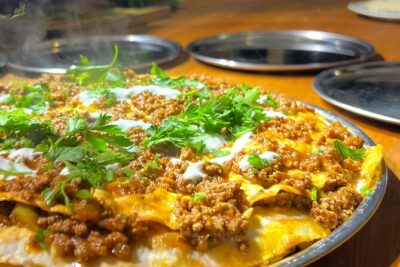
The menu is built around Turkish home cooking rather than restaurant showpieces. A typical meal can include seasonal salad, purslane salad, or a salad made from minced seasonal vegetables. Stuffed grape leaves may appear as a starter, while stewed vegetables, meat stew with vegetables, or Turkish ravioli can form the main course.
Dessert is listed as aside, a Cappadocian sweet prepared with flour, grape molasses, and butter or sunflower oil. The wording suggests a traditional regional dessert, though the exact recipe and presentation can vary with the host.
The menu is not guaranteed dish by dish. Several hosts have prepared different meals, including yogurt soup, meatballs wrapped in eggplant, rice with beans and pastrami sauce, semolina dessert, and several mezze. This is good news if you want to see how Turkish families actually cook, but less ideal if you have your heart set on one particular recipe.
You can also expect water, black tea, or coffee. Alcohol is not included, and soda or pop is also excluded. Some people have shared local wine during the meal, but you should treat that as separate from the published inclusions.
A real home kitchen, not a polished cooking studio
The setting is the experience. You may find yourself in an ordinary local home, sitting with a family and cooking in the same space where they prepare their own meals. One class took place in a young couple’s neat, modern apartment in Urgup, with the kitchen arranged so six people could work together.
Another host, Basa, welcomed a couple into her home with her husband. They prepared yogurt-based soups and eggplant-wrapped meatballs, and the visitors described the meal as one of their best in Turkey. Feliz hosted a solo participant and helped prepare yogurt soup, rice with beans and pastrami sauce, salad, and semolina dessert.
The hosts do not all follow the same teaching style. Some explain every step and let you do much of the work. Others make a large pot of each dish, with you helping to cut vegetables and stir from time to time. One particularly useful detail is that some ingredients may already be cooked before you arrive.
So, if you want a technical lesson with exact measurements and a recipe booklet, this may feel loose. If you want a warm meal, local conversation, and a look at how food is prepared in a Cappadocian household, the informal format is part of the appeal.
Meeting the hosts and local interpreters
The interpreter is an important part of the experience. Kadir has accompanied several classes, taking people from their hotels to Urgup, helping with shopping, and translating in the kitchen. He has also been praised for making conversation easy across subjects such as Turkish culture, the economy, and local life.
The cooks vary. Basa is described as patient and welcoming. Feliz opened her home warmly to a solo participant. Ozgul taught an adult and an 11-year-old daughter in a cozy restaurant setting, explaining each step and making the class feel personal. Nihat led a class in his apartment and adapted the food for vegetarians and a participant who needed gluten-free dishes.
Because the host can change, the atmosphere and amount of cooking can change too. You may spend much of the time working beside the cook, or you may be part of a more social meal with occasional kitchen tasks. The English ability of the host also differs. One host did not speak English, but the interpreter remained available throughout the class.
A different side of Goreme on the same trip:
- Cappadocia Hot Air Balloon Ride / Royal Balloon
★︎ 5.0 · 6,829 reviews - Cappadocia Hot Air Balloon Ride/ Turquaz Balloons
★︎ 5.0 · 3,330 reviews - Cappadocia Sunset ATV Tour
★︎ 5.0 · 2,984 reviews - Cappadocia Sunrise Hot Air Balloon Flight / Discovery Balloons
★︎ 5.0 · 2,882 reviews
Why the small group size matters
The maximum group size is six. That is a strong feature for a home-based class, where a large crowd would quickly make the kitchen awkward. With fewer people, you have a better chance to ask questions, help with preparation, and speak directly with the host.
Some bookings may become private if no one else joins. That can make the experience more memorable, especially for couples or families. At the same time, a small group does not guarantee that every person will get a separate cutting board, pot, or recipe assignment. The kitchen remains a shared working space.
Families should note that children must be accompanied by an adult. Children have been included in preparation, and helping with the food can make them more willing to taste unfamiliar dishes. Still, the class is not described as a children’s program, so adult supervision remains your responsibility.
Timing, transport, and the pace of the afternoon
The advertised duration is about four hours, including pickup, shopping, cooking, eating, and return to your hotel. One past class lasted five to six hours because the group spent extra time talking and working together. If you have a balloon flight, guided sightseeing, or a bus departure later that day, leave plenty of room around the four-hour estimate.
Pickup and drop-off are included for the listed Cappadocia towns. This saves you the trouble of arranging a taxi to an unfamiliar home or restaurant. One driver reportedly got lost on the way to class, so allow some patience for the transfer. That sounds like an isolated transport problem, but it is worth keeping your schedule flexible.
The morning option is designed for lunch. The afternoon option is designed for dinner. Choose lunch if you want the rest of the evening free. Choose dinner if you prefer a slower social meal after sightseeing, though dinner may run later than the advertised four hours if conversation stretches on.
How much value do you get for $176.61?
At $176.61 per person, this is not a cheap meal. You are paying more than you would for a standard restaurant dinner, and the hands-on cooking may be limited depending on the host.
The price becomes easier to justify when you use the full package: hotel transportation, Urgup shopping, a local interpreter, a small group, cooking instruction, and a three-course lunch or dinner. You are also paying for access to a private home or a less tourist-focused setting, something you cannot easily arrange on your own.
I would consider it good value for a first visit to Cappadocia if you care about food and conversation more than strict culinary technique. It is less compelling if you mainly want a low-cost meal or a formal class where you prepare every dish from start to finish.
Dietary needs and special requests
One class successfully accommodated vegetarians and a person with celiac disease, including finding gluten-free flour for dessert. That is encouraging, but it should not be treated as an automatic guarantee for every date or host.
Tell the provider about allergies and dietary restrictions before the class. The menu can vary, and dishes such as meat stew, pastrami sauce, bread, and flour-based dessert may require changes. The supplied information confirms that service animals are allowed, but it does not give wider accessibility details for every home or restaurant.
The minimum drinking age is listed as 21. Alcoholic drinks are not included, and soda is not included either. Water, black tea, and coffee are provided.
The most authentic part is often after the cooking
The meal itself is only half the point. Sitting with a local family lets you ask about everyday life in Cappadocia, not just famous sights and old stone churches. Past hosts have spoken excellent English, while interpreters help when they do not.
The social side can be lively. One evening included dancing in the kitchen and wine. Another involved long conversations with two young Turkish professionals about how people live in modern Turkey. These moments are not fixed program items, but they show why the home setting matters.
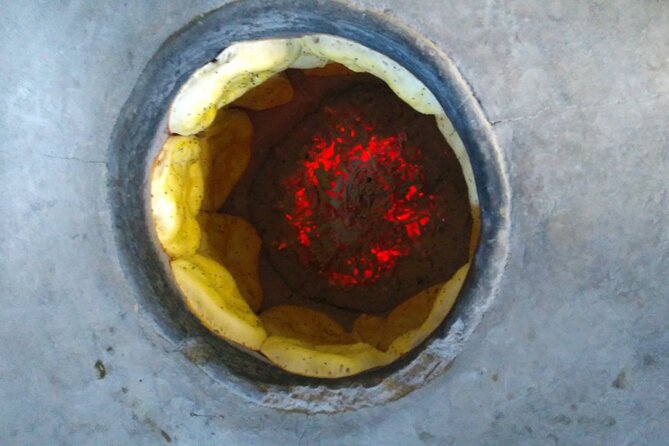
You may also learn small practical techniques that stay with you after the trip. One participant returned home with five recipes and kitchen tips. Another learned to put bread into a tandoor oven, a simple task that became one of the most memorable parts of the visit.
Who should book this Cappadocia cooking class?
I recommend it most to couples, families, and solo visitors who enjoy sitting down with local people and trying foods that may not appear on a standard restaurant menu. It also suits anyone who wants a break from sightseeing in the summer heat, since the kitchen and meal provide a slower change of pace.
Families should ask about the planned dishes if children are selective eaters. Food lovers with allergies should provide details in advance. People seeking a serious chef-led lesson should ask how hands-on the particular host will be, because the format is not identical every time.
The experience is offered in English with a local interpreter. It is mobile-ticket friendly, and group discounts may be available. Confirmation is provided at booking. Free cancellation is available up to 24 hours before the start time, but changes or cancellations inside that window are not accepted for a refund.
Should you book it?
Book this class if you want an intimate look at Cappadocian food and daily life, with transportation handled for you. The strongest reasons are the small group, the Urgup shopping stop, the home setting, and the chance to speak with people such as Kadir and the local cooks.
Skip it if your main goal is a precise, individual cooking lesson with guaranteed recipes and equal kitchen time. This is a flexible cultural meal with cooking at its center. For the right person, that relaxed format is exactly what makes the $176.61 price worthwhile.
FAQ
Where does the Cappadocia cooking class take place?
The experience includes shopping in Urgup, followed by cooking at a local home, apartment, or restaurant. The exact host and location can vary.
What time does the class start?
The lunch option includes hotel pickup at 10 a.m. The dinner option includes pickup at 4 p.m.
How long does the experience last?
The advertised duration is about four hours. Some classes may last five to six hours when the group spends extra time cooking and talking.
Is hotel pickup included?
Yes. Pickup and drop-off are included for hotels in Goreme, Avanos, Uchisar, Ortahisar, Cavusin, Urgup, Mustafapasa, Ayvali, and Nevsehir.
How many people can join?
The maximum group size is six people. A booking may become private if no other participants join.
What food is included?
A three-course lunch or dinner is included. Possible dishes include salads, stuffed grape leaves, stewed vegetables, meat stew, Turkish ravioli, and Cappadocian dessert.
Are drinks included?
Water, black tea, and coffee are included. Alcoholic beverages and soda are not included.
Is the class taught in English?
The experience is offered in English with a local interpreter. Some hosts may not speak English directly, so the interpreter helps throughout the class.
Can children join?
Yes, but children must be accompanied by an adult.
What is the cancellation policy?
You can cancel at least 24 hours before the start time for a full refund. Cancellations or changes made less than 24 hours before the experience are not accepted for a refund.
More Goreme Workshops
- Cappadocia Pottery Workshop Class
★︎ 5.0 · 191 reviews - Cappadocia: Turkish Mosaic Lamp Workshop in Göreme – All Included
★︎ 5.0 · 139 reviews - Sand-Brewed Turkish Coffee Workshop in Cappadocia
★︎ 5.0 · 64 reviews - Turkish Coffee Workshop on Sand & Fortune Telling + Gift Set
★︎ 5.0 · 61 reviews
Just added around Goreme
- 2 Days Cappadocia Tour★︎ 5.0 · 3 reviews
- Cappadocia Dreamscapes: Tailored Shoots by Zerders Photography★︎ 5.0 · 3 reviews
- Best Cappadocia Private Tour★︎ 4.5 · 3 reviews
- Private Cappadocia Tour w/Chimneys and Goreme Open Air Museum★︎ 5.0 · 3 reviews
- Southeast Anatolia Tour (Nemrut, Gobeklitepe, Zeugma)★︎ 5.0 · 3 reviews
- Full Day Cappadocia Private Guide And Car★︎ 5.0 · 3 reviews
- Cappadocia Turkish Night★︎ 4.5 · 3 reviews
- Cappadocia Photo Shoot with Flying Dress Option in Goreme★︎ 5.0 · 3 reviews
Cappadocia Cooking Classes, compared.
Cappadocia traditional cooking with Chef
Read our review →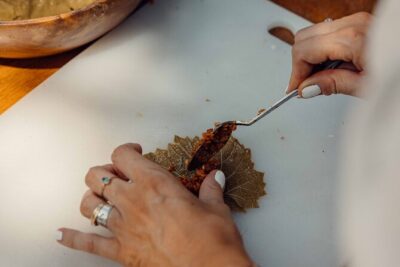
Cooking Class at Exclusive Kings Valley
Read our review →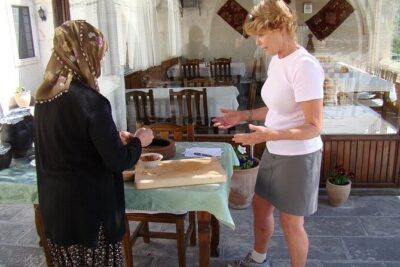
Cappadocia: Evening Cooking Class with Hotel Transfer
Read our review →
Private Cappadocia Food and Culture Tour: Turkish Cooking Class
Read our review →Browse the lists this tour appears in