Review · TOURS
7 Days Istanbul, Cappadocia and Ephesus Tour
Cappadocia’s cave churches, Istanbul’s imperial monuments, and Ephesus’s marble streets make this seven-day private tour a strong first look at Turkey. You move between three very different regions without having to arrange each transfer, hotel connection, or guide yourself.
I like the private format, which lets your group travel by air-conditioned minivan and keep the day focused on your interests. I also like the range of places covered, from the Grand Bazaar and Bosphorus to Kaymakli, Ephesus, Priene, Miletus, and Didyma. The main drawback is the pace: several days are long, and Day 5 in particular combines sightseeing, a flight, and a lengthy drive.
In This Review
- Key points at a glance
- A private route through Turkey’s biggest sights
- Istanbul begins with an easy arrival
- Blue Mosque, Topkapi, and Istanbul’s old markets
- Hagia Sophia, the Basilica Cistern, and the Bosphorus
- Cappadocia’s fairy chimneys and cave churches
- Kaymakli and Cappadocia’s quieter side
- Ephesus and the sacred sites around Selcuk
- Priene, Miletus, and Didyma’s oracle
- What the $1,410 price really covers
- Who should book this seven-day route?
- Should you book it?
- FAQ
- How long is the tour?
- Is this a private tour?
- What is included in the price?
- Are dinners included?
- Does the tour include airport pickup?
- Which airports are used during the tour?
- Is the tour refundable if I cancel?
Key points at a glance
- Private touring throughout: Your group has its own guides, airport transfers, and air-conditioned minivan.
- Three major regions in one week: Istanbul, Cappadocia, and the ancient sites around Ephesus all fit into a single trip.
- Seven lunches included: Dinners, drinks, alcohol, and personal spending remain your responsibility.
- Cappadocia goes beyond the usual viewpoints: You visit Devrent Valley, Pasabag, Goreme Open Air Museum, Kaymakli Underground City, Soganli Valley, and more.
- Strong ancient-world finish: Ephesus is followed by Priene, Miletus, and the Temple of Apollo at Didyma.
- Helpful named contacts: Mustafa is identified as a guide, while Ilker Olcaydu handled trip planning for one booking, useful names to know when discussing arrangements.
A private route through Turkey’s biggest sights
At $1,410 per person, this tour is priced as a full-service private trip rather than a simple sightseeing package. The value comes from having one company coordinate airport pickups, private guiding, minivan transport, lunches, hotel transfers, and the movement between distant regions.
That matters in Turkey. Istanbul, Cappadocia, and the Aegean coast are not close neighbors, and the schedule includes flights and long road transfers. You are paying for fewer transport headaches and a guide at the major sites, not just admission tickets.
The private setup also changes the feel of the trip. You are not sharing the vehicle or guide with a large coach group, and the experience is limited to your own party. If you want to pause longer at a church, ask more questions about Ottoman life, or adjust the rhythm of a walking tour, a private arrangement gives you more room to do so.
Still, you should approach the week as an active sightseeing program. It covers a lot of ground, and some days involve early checkouts, airport connections, and hours on the road. This is a good choice if you want breadth and structure. It is less suited to someone who prefers two or three slow days in each place.
Other Goreme tours people book alongside this one:
- Cappadocia Hot Air Balloon Ride / Royal Balloon
★︎ 5.0 · 6,829 reviews - Cappadocia Hot Air Balloon Ride/ Turquaz Balloons
★︎ 5.0 · 3,330 reviews - Cappadocia Sunset ATV Tour
★︎ 5.0 · 2,984 reviews
Istanbul begins with an easy arrival
Your first contact is at Istanbul Airport, where a driver meets you at the exit gate holding a board with your name. You are then taken to your hotel in Istanbul’s old district. After check-in and some rest, a guide meets you in the lobby for an orientation about the city and the week ahead.
That arrival service is one of the most useful parts of the package. Istanbul Airport can feel far from the historic center, especially after a long international flight. A named pickup removes the usual confusion about finding the right vehicle or arranging a last-minute taxi.
The first day is intentionally light beyond the transfer and orientation. That is sensible. You have time to settle in rather than being rushed straight into a palace or museum.
Blue Mosque, Topkapi, and Istanbul’s old markets
Day 2 opens with the Blue Mosque, completed in 1616 under Sultan Ahmet I. The building is still an active place of worship, so the visit requires appropriate clothing and respect for prayer times. The one-hour stop gives you a useful introduction to Ottoman religious architecture without making the morning too heavy.
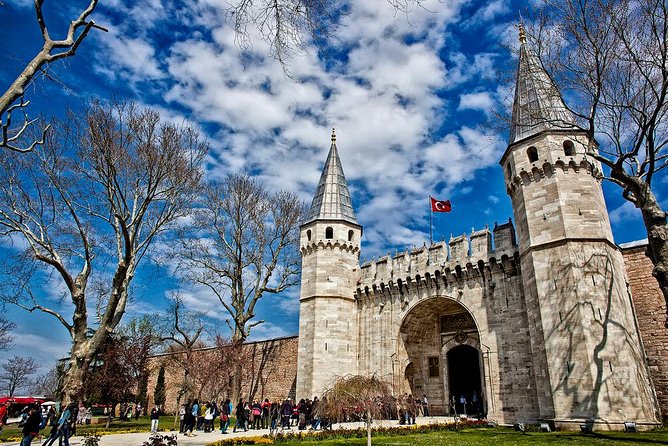
Topkapi Palace follows, with two hours set aside for the visit. This is more than a single palace building. It is a large collection of courtyards and museum rooms containing objects gathered by Ottoman sultans over nearly five centuries. I would give this stop your full attention, since it provides the political and royal context behind much of what you see elsewhere in Istanbul.
After lunch, you head to the Grand Bazaar. It dates to the 16th century and remains one of the world’s great covered shopping areas. The visit is listed at one hour, which is enough to get a taste of its lanes, jewelry shops, textiles, souvenirs, and sales pitches, but not enough for an unhurried shopping expedition.
The title Grand Bazaar Jewelers suggests that jewelry may receive particular attention. If you are considering a significant purchase, take your time, compare pieces, and ask about receipts and return terms before paying. The tour includes the stop, but purchases are personal expenses.
The day ends at Misir Carsisi, better known as the Spice Market. Walking downhill from the Suleymaniye Mosque toward the market gives the final stretch a more local street feel than a coach-only visit. You can browse spices, Turkish delight, and other food items, though these are also at your own cost.
This first full day is packed. Blue Mosque, Topkapi, Grand Bazaar, and Spice Market each deserve more time than a quick checklist allows, but the route gives you a useful sweep of imperial Istanbul in one day.
Hagia Sophia, the Basilica Cistern, and the Bosphorus
Day 3 begins after you check out. The first stop is the Hippodrome, the former Roman arena dating to the second century AD. The surviving monuments include the Obelisk of Thutmose III, the German Fountain, the Serpent Column, and the Obelisk of Constantine.
The Hippodrome is an open urban space rather than a complete ancient stadium, so the guide’s explanations make a real difference. A one-hour visit lets you understand how this area once served as a center for public events and imperial display.
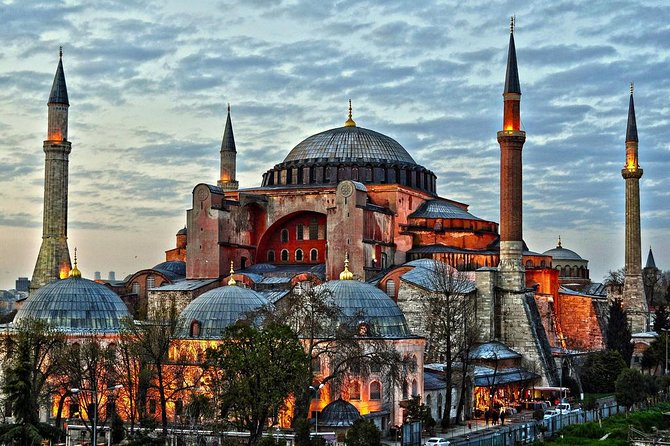
Next comes Hagia Sophia, built in 537 under Justinian. Two hours is a reasonable allowance for a major monument of this scale. The building’s long religious and political story makes it one of the essential stops in Istanbul, and this is a place where a private guide can help you read the structure instead of simply walking through it.
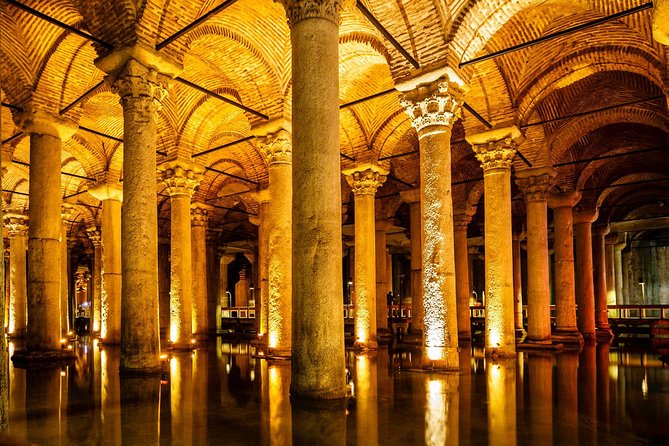
The Basilica Cistern is scheduled for one hour. Built in the same period as Hagia Sophia, this underground water chamber offers a very different experience from the mosque and palace above ground. The dim interior, columns, and water engineering show how much practical infrastructure supported imperial Constantinople.
After lunch, you take an approximately two-hour Bosphorus cruise. From the water, you see palaces, Ottoman summer residences, historic houses, and the shoreline linking Europe and Asia. This is a welcome change of pace after several indoor monuments and crowded commercial streets.
The day ends with transfer to Istanbul Airport and onward travel to Cappadocia. The schedule gives two hours to the airport transfer, and the exact timing depends on the departure. Confirm the domestic flight arrangements and timing before you go, since this connection shapes the rest of the day.
A different side of Goreme on the same trip:
- Cappadocia Sunrise Hot Air Balloon Flight / Discovery Balloons
★︎ 5.0 · 2,882 reviews - Green (South) Tour Cappadocia (small group) with lunch and ticket
★︎ 5.0 · 2,317 reviews - Cappadocia Hot Air Balloons or Kelebek Flight
★︎ 5.0 · 2,026 reviews - Red (North) Tour Cappadocia (small group) with lunch and tickets
★︎ 5.0 · 1,975 reviews
Cappadocia’s fairy chimneys and cave churches
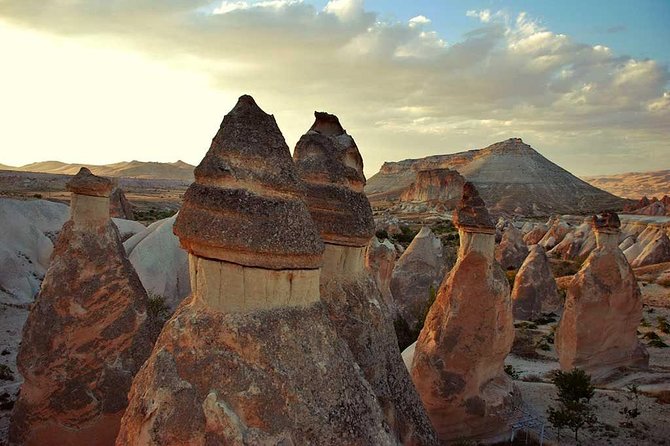
Day 4 is devoted to Cappadocia’s unusual volcanic formations and religious sites. Devrent Valley, also called Imagination Valley, begins the day with a short 30-minute stop. The rock shapes here invite comparisons to animals and other forms, and your guide can help explain how the formations developed over millions of years.
Pasabag follows for an hour. Its tall fairy chimneys are among the most recognizable formations in Cappadocia, with unusual multiple caps and narrow stems. The stop is highly visual and works well for photographs, though uneven ground and exposure to the weather can make comfortable shoes useful.
At Avanos, you visit a local pottery shop and learn how pottery traditions reach back to the Hittite period. This is one of the better cultural stops because it connects the area’s geology with a living craft. Clay from the region helped shape local pottery, and the demonstration gives you something more tangible than another viewpoint.
The Goreme Open Air Museum receives two hours. The site contains cave churches, many decorated with wall paintings, and is among Cappadocia’s most important stops. The tour description refers to hundreds of cave churches in the wider area, but the museum itself is best understood as a concentrated collection of chapels and monastic spaces.
You then pause at cave dwellings before heading to Uchisar Castle and Pigeon Valley. Uchisar is a prominent rock citadel with broad views, while Pigeon Valley is known for its carved shelters and dramatic scenery. The schedule separates the castle and valley into individual stops, giving you time for photographs rather than treating them as one rushed roadside pause.
Goreme Panorama closes the day with another view over Cappadocia. There is some repetition in the viewpoints, but the formations change with direction and light. If you enjoy photography, this is a productive day. If you prefer archaeology to scenery, the open-air museum and the next day’s underground city will be the stronger highlights.
Kaymakli and Cappadocia’s quieter side
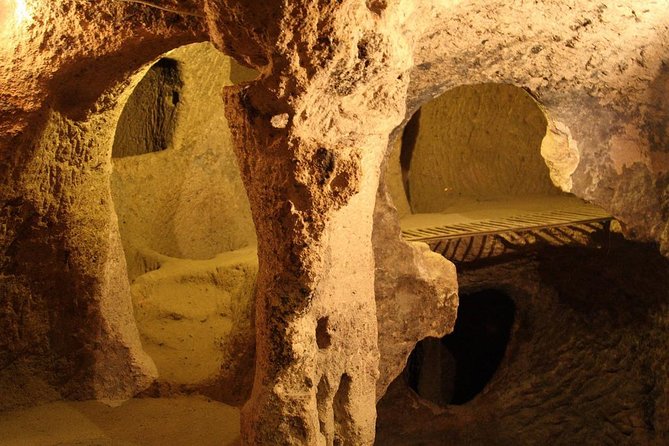
Day 5 starts with checkout and a two-hour visit to Kaymakli Underground City. The site shows how Christian communities used underground spaces for protection during periods of persecution and invasion. Narrow passages and enclosed rooms make this a memorable stop, but anyone uncomfortable in tight spaces should keep the setting in mind.
The group then drives to Sinassos, an old Greek village re-inhabited after 1927. The village adds a human layer to Cappadocia’s story, showing that the region is not only about rock formations and cave churches. The one-hour stop is short, but it breaks up the day with a settlement rather than another natural viewpoint.
Soganli Valley follows. This mostly abandoned village includes churches and offers a quieter setting than Goreme’s more popular sites. One hour will provide an introduction rather than a long walk through every part of the valley.
Later, you drive about an hour to Kayseri Erkilet Airport and fly to Izmir. After landing, the program allows another hour and a half by road to your hotel. This is the week’s most demanding transfer day, and it is worth packing a small day bag so you do not need to search through larger luggage during the airport and hotel changes.
The tour includes private transfers and lunches, but the supplied details do not clearly state whether every domestic airfare is included in the $1,410 price. Ask Pupa Travel to confirm this before booking. That single detail can change the tour’s real value.
Ephesus and the sacred sites around Selcuk
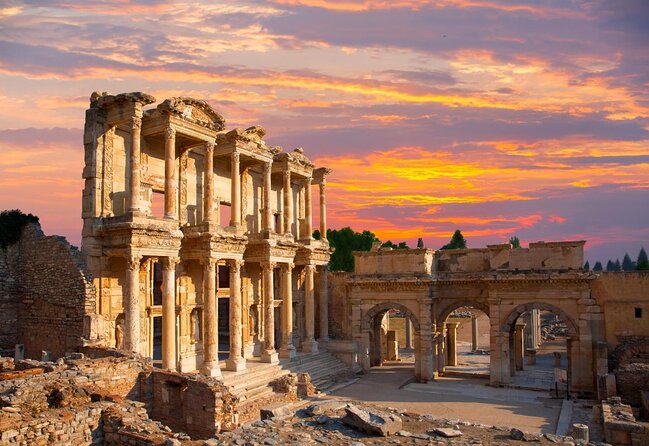
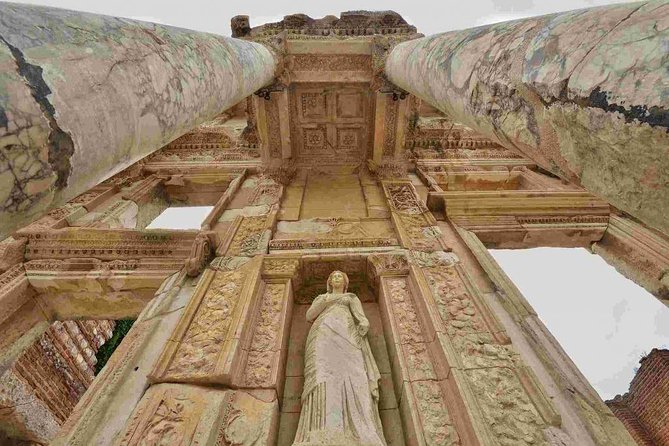
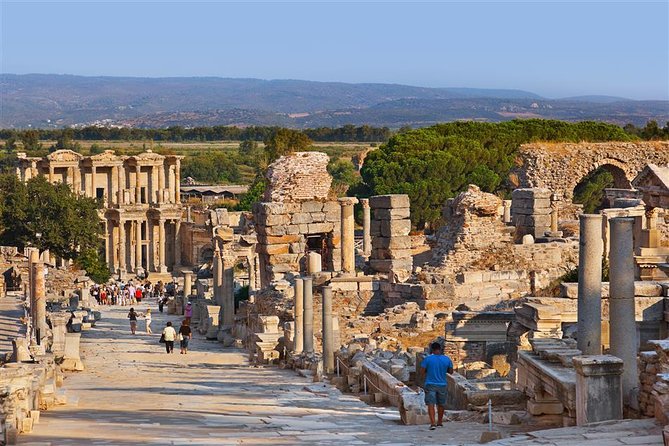
Day 6 begins at Ephesus, the ancient city that forms the centerpiece of the Aegean portion of the trip. Two hours lets you walk along the remains and see the scale of the former city, though you may wish you had longer. The site rewards attention to streets, public buildings, and small details, not just the most famous columns.
After lunch, you visit the Temple of Artemis, once counted among the Seven Wonders of the Ancient World. The surviving remains are limited, so this stop works best when you understand the temple’s former importance rather than expect a complete monument.
The Basilica of St. John comes next. Justinian funded the basilica, the same emperor associated with Hagia Sophia in Constantinople. Its position near Selcuk connects the Roman and Christian chapters of the region and gives the day a useful shift from classical city to later religious center.
At the House of the Virgin Mary, you visit the site associated with Mary’s final years. The stop lasts one hour and has religious importance for many visitors. The program then returns to the Selcuk Ephesus Museum, where artifacts from the ancient city help fill in details that the ruins alone cannot show.
This is another full day, but the stops are close enough to form a sensible cluster. The museum is especially valuable because it lets you see objects in context after walking through Ephesus itself.
Priene, Miletus, and Didyma’s oracle
The final sightseeing day reaches three major ancient sites. The drive to Priene takes one to two hours, so expect a long start. Priene began as an Ionian port city in the seventh century BC, though the Meander River later silted up the coastline. That change explains why a city once tied to the sea now feels separated from it.
You have two hours at Priene. The site is a good match for anyone interested in ancient city planning, temples, and the way geography can reshape a settlement’s fortunes.
Miletus follows with another two-hour visit. The city is linked with philosophers including Thales, Anaximenes, and Hekaistos. The guide’s explanations are important here because the intellectual importance of Miletus is not always obvious from the remaining stones.
The last major stop is Didyma and the Temple of Apollo, where a major oracle served in antiquity. Two hours are scheduled, with lunch placed before or after the visit depending on the day’s timing. The temple’s scale and unfinished remains make it a strong final ancient site, but the long drives mean you should expect a tiring finish.
From there, you transfer to Izmir Adnan Menderes Airport and fly to Istanbul, with the exact airport timing depending on your flight. The program ends with that transfer rather than an extended final evening.
What the $1,410 price really covers
The price includes private tours, private airport transfers, private guides, an air-conditioned minivan for the tours, and seven lunches. These inclusions are meaningful because transport between regions is the hardest part to organize alone.
Dinners are not included, along with alcohol, other drinks, and personal expenses. Budget separately for meals beyond lunch, shopping at the Grand Bazaar and Spice Market, and any purchases at the pottery or jewelry stops.
The tour’s strongest value is convenience. You get a single point of contact for a route that otherwise requires several hotels, transfers, guides, and regional connections. The weaker point is flexibility: a tightly arranged program may leave little space for spontaneous wandering.
The provider has received especially strong praise for fast planning and careful coordination. Ilker Olcaydu is identified as a personal travel planner who handled a last-minute booking, and Mustafa is named as a highly regarded guide. Ask who will be assigned to your group and how the guides coordinate across Istanbul, Cappadocia, and the Ephesus region.
Who should book this seven-day route?
I would choose this tour if you want to see Turkey’s main highlights in one week and prefer private support over independent transport planning. It suits first-time visitors, couples, families, and small groups who value a dedicated vehicle and guide.
You should also be comfortable with long days. The program includes extensive walking at ancient sites, underground passages, airport transfers, and several changes of base. It is not a relaxed resort holiday.
Before paying, confirm the hotel names, domestic flight inclusions, exact flight times, and how much free time you receive at each site. The stated cancellation terms are strict: the experience is non-refundable and cannot be changed after booking, except when the minimum number of participants is not met and an alternative or full refund is offered.
Should you book it?
Book this tour if your priority is a well-supported first visit covering Istanbul, Cappadocia, and western Turkey’s major ruins. The private format, airport pickups, named planning contacts, and wide range of included sites make the $1,410 price reasonable when the domestic flights and accommodations match your expectations.
Skip it if you want slow mornings, independent meals, or several days in one town. For the right kind of visitor, this is a packed but practical introduction to Turkey, with excellent variety and very little need to solve transport problems yourself.
FAQ
How long is the tour?
The tour lasts approximately seven days and covers Istanbul, Cappadocia, Ephesus, and ancient sites near the Aegean coast.
Is this a private tour?
Yes. Only your group participates, with private guiding, private airport transfers, and a private air-conditioned minivan for the tours.
What is included in the price?
The package includes private tours, private airport transfers, private guiding, an air-conditioned minivan, and seven lunches.
Are dinners included?
No. Dinners, alcoholic beverages, and personal expenses are not included.
Does the tour include airport pickup?
Yes. At Istanbul Airport, a driver meets you at the exit gate with a sign bearing your name and transfers you to your hotel.
Which airports are used during the tour?
The program includes Istanbul Airport, Kayseri Erkilet Airport, and Izmir Adnan Menderes Airport. It also includes flights between Cappadocia, Izmir, and Istanbul as described in the schedule. Confirm with Pupa Travel whether the airfare is included in the stated price.
Is the tour refundable if I cancel?
No. The experience is non-refundable and cannot be changed for any reason. If the provider cancels because the minimum number of participants is not met, you are offered another date or experience, or a full refund.
Just added around Goreme
- 2 Days Cappadocia Tour★︎ 5.0 · 3 reviews
- Cappadocia Dreamscapes: Tailored Shoots by Zerders Photography★︎ 5.0 · 3 reviews
- Best Cappadocia Private Tour★︎ 4.5 · 3 reviews
- Private Cappadocia Tour w/Chimneys and Goreme Open Air Museum★︎ 5.0 · 3 reviews
- Southeast Anatolia Tour (Nemrut, Gobeklitepe, Zeugma)★︎ 5.0 · 3 reviews
- Full Day Cappadocia Private Guide And Car★︎ 5.0 · 3 reviews
- Cappadocia Turkish Night★︎ 4.5 · 3 reviews
- Cappadocia Photo Shoot with Flying Dress Option in Goreme★︎ 5.0 · 3 reviews
Tours, compared.

Green (South) Tour Cappadocia (small group) with lunch and ticket
Read our review →
Full Day Cappadocia Red and Green Combined Day Tour
Read our review →
Red (North) Tour Cappadocia (small group) with lunch and tickets
Read our review →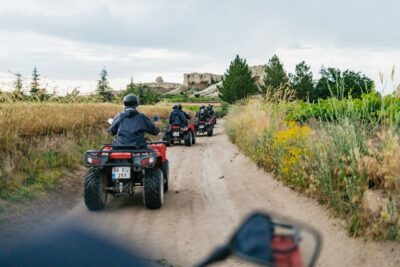
Cappadocia: Sunset or Daytime ATV Adventure Tour
Read our review →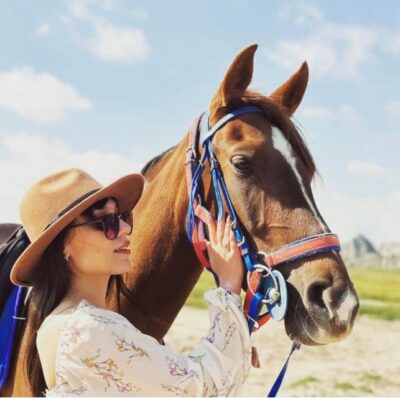
Cappadocia: Horseback Riding Adventure Tour
Read our review →
Full Day Cappadocia Tour( Red Tour + Underground City )
Read our review →